
There's something wonderfully simple yet impressive about the **Baked Salmon with Honey Soy Glaze Recipe**. The gentle sweetness paired with savory soy and a hint of mustard creates a flavorful glaze that turns ordinary salmon into a dinner you’ll want to make again and again.

Jump to:
Why You'll Love This Recipe
I adore how effortlessly this baked salmon comes together—perfect for busy weeknights but elegant enough when friends pop over. The honey soy glaze adds a perfect balance of sweet and umami, elevating your salmon without any fancy techniques.
- Simple Ingredients: You probably have everything in your pantry already, making this a stress-free go-to.
- Quick Prep and Bake: Ready in about 30 minutes, perfect when time is tight but you still want something homemade.
- Customizable Flavor: You can tweak the glaze to be sweeter, tangier, or more garlicky depending on your mood.
- Healthy and Delicious: Salmon’s packed with omega-3s, and this glaze lets its natural flavor shine without heavy sauces.
Ingredients & Why They Work
This glaze is such a winning combo because the salty soy sauce perfectly balances the honey's sweetness, while the mustard adds a subtle tang with a bit of depth. Fresh garlic amps up the aroma and flavor, making every bite satisfying. Here’s a quick breakdown of each ingredient’s magic:

- Salmon Fillets: I always choose skin-on fillets for that extra crispiness and moisture retention during baking.
- Low Sodium Soy Sauce: Keeps the dish from getting too salty while delivering savory depth.
- Olive Oil: Helps the glaze coat the salmon evenly and keeps it moist.
- Honey: Brings a natural sweetness and helps create that glossy, caramelized finish.
- Dijon Mustard: Adds a gentle tang and richness that balances the sweet and salty flavors.
- Garlic: Minced fresh garlic gives the glaze a fragrant kick that brightens the whole dish.
Make It Your Way
I like to think of this recipe as a base canvas. Over time, I've played around with the glaze, sometimes adding a pinch of red pepper flakes for warmth or swapping the olive oil for toasted sesame oil to add a nutty twist. Feel free to personalize it to what makes you happiest!
- Variation: Adding freshly chopped ginger to the glaze makes it zingier—one of my go-to tweaks when I want a bit of extra brightness.
- Spicy Twist: A dash of Sriracha or chili flakes mixed into the glaze gives the salmon a nice kick without overwhelming the honey-soy balance.
- Gluten-Free: Just swap in tamari or coconut aminos for soy sauce, and you’re good to go without losing flavor.
Step-by-Step: How I Make Baked Salmon with Honey Soy Glaze Recipe

Step 1: Let Your Salmon Come to Room Temperature
Taking the salmon out of the fridge about 15-20 minutes before baking can make a surprising difference. It helps the fish cook evenly and prevents it from getting rubbery on the outside while staying underdone inside.
Step 2: Preheat & Prep Your Baking Dish
Preheat your oven to 400°F. I like to line a baking dish with parchment paper or foil to save on cleanup—trust me, this marinade can get sticky and caramelize beautifully, but you’ll want an easy clean afterward!
Step 3: Whisk Together the Honey Soy Glaze
In a small bowl, combine soy sauce, olive oil, honey, Dijon mustard, and freshly minced garlic. Whisk it until the honey is well incorporated and the glaze looks glossy. This little bowl of magic is what makes this recipe shine.
Step 4: Coat & Bake Your Salmon
Place your salmon fillets skin side down in the baking dish. Brush half of the glaze over the salmon evenly, reserve the rest for later. Pop it in the oven for about 12 minutes.
Step 5: Glaze Again & Finish Baking
After 12 minutes, brush on the remaining glaze. Then bake it again for another 2 to 8 minutes depending on thickness and your preferred doneness. The salmon is ready when it flakes easily with a fork and has gorgeous caramelized edges.
Top Tip
From my experience, the glaze is the star here, so here are my handy tips to nail it every time:
- Don't Skip Room Temp: Letting salmon warm up prevents uneven cooking and keeps it juicy.
- Reserve Some Glaze: Brushing on the sauce halfway through baking boosts flavor layers and gives the salmon that glossy, sticky finish.
- Watch the Bake Time: Start checking around 14 minutes, especially with thinner fillets, to avoid overcooking—salmon dries out fast!
- Use Fresh Garlic: Fresh is best here; pre-minced garlic just doesn't deliver the same punch in this glaze.
How to Serve Baked Salmon with Honey Soy Glaze Recipe

Garnishes
I always sprinkle freshly chopped green onions and toasted sesame seeds on top right before serving. The green onions add a crisp freshness, and the sesame seeds bring a delicate crunch plus a lovely nutty aroma that complements the glaze beautifully.
Side Dishes
This salmon pairs wonderfully with steamed jasmine rice or quinoa to soak up extra glaze. Roasted veggies like broccoli or snap peas with a squeeze of lemon brighten the plate and add freshness alongside the rich glaze.
Creative Ways to Present
For a dinner party, I like to place the glazed salmon on a bed of lightly dressed arugula and scatter pomegranate seeds over the top—makes it look like a restaurant dish and adds a pop of color and tartness that balances the glaze.
Make Ahead and Storage
Storing Leftovers
I usually store leftover salmon in an airtight container in the fridge and try to eat it within 2 days. The glaze keeps the fish moist, but salmon can dry out quickly, so it's best enjoyed fresh.
Freezing
Freezing cooked salmon isn’t my favorite because the texture changes a bit, but if you do need to freeze it, wrap tightly in plastic wrap and foil to prevent freezer burn. Thaw overnight in the fridge before reheating gently.
Reheating
To reheat leftovers without drying them out, I cover the salmon with foil and warm it in a 275°F oven for about 10 minutes. This slow gentle heat helps keep the glaze sticky and the fish moist.
Frequently Asked Questions:
Yes! Just thaw the salmon completely in the refrigerator overnight before using to ensure even cooking and the best texture.
Absolutely. Swap the soy sauce for tamari or coconut aminos, both of which are naturally gluten-free and will keep the delicious flavor profile intact.
Look for salmon that flakes easily with a fork but still retains some moisture. The FDA recommends 145°F internal temperature, but many prefer about 125-130°F and let it rest a few minutes for the best texture.
Definitely! This honey soy glaze works beautifully on other fishes like cod, trout, or even firm scallops. Just adjust baking time accordingly for different thicknesses.
Final Thoughts
This Baked Salmon with Honey Soy Glaze Recipe has become a staple in my kitchen because it’s just so reliable and delicious. Whether you’re cooking for yourself or impressing guests, this glaze never fails to deliver flavor and elegance without fuss. Give it a try—you might just find yourself reaching for salmon a little more often!
Print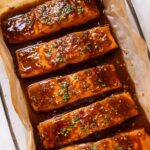
Baked Salmon with Honey Soy Glaze Recipe
- Prep Time: 10 minutes
- Cook Time: 20 minutes
- Total Time: 30 minutes
- Yield: 4 servings
- Category: Main Course
- Method: Baking
- Cuisine: American
- Diet: Low Salt
Description
This Best Ever Baked Salmon recipe features tender, flavorful salmon fillets baked with a sweet and savory glaze made of low sodium soy sauce, olive oil, honey, Dijon mustard, and garlic. Perfectly baked to flaky perfection, this dish is quick to prepare and ideal for a healthy weeknight meal.
Ingredients
Salmon
- 4 salmon fillets, 6 ounces each, skin on
Glaze
- 1 ½ tablespoons low sodium soy sauce
- 1 tablespoon olive oil
- 1 tablespoon honey
- 1 ½ teaspoons Dijon mustard
- 2 cloves garlic, minced
Instructions
- Bring salmon to room temperature: Remove the salmon from the refrigerator and let it rest at room temperature while you prepare the glaze ingredients to ensure even cooking.
- Preheat oven and prepare baking dish: Preheat your oven to 400° F. Line a 9×13-inch baking dish with parchment paper or foil for easy cleanup.
- Mix glaze: In a small bowl, whisk together the low sodium soy sauce, olive oil, honey, Dijon mustard, and minced garlic until well combined.
- Apply glaze to salmon: Place the salmon fillets skin side down in the prepared baking dish. Reserve half of the glaze in a separate dish. Brush or spoon the remaining half of the glaze evenly over the salmon fillets.
- Bake salmon: Bake the salmon for 12 minutes. Then remove from the oven and brush the salmon with the reserved glaze.
- Finish baking: Return the salmon to the oven and bake for an additional 8 minutes, or until cooked to your preferred doneness. The salmon should flake easily with a fork when done. Thicker fillets may require longer baking.
- Check doneness and serve: For food safety, the FDA recommends cooking salmon to an internal temperature of 145° F, but some prefer it slightly less cooked at 125-130° F with a rest of 3 minutes before serving. Serve immediately.
Notes
- You can swap the glaze for a dry rub such as a salmon seasoning blend if you prefer a less saucy finish. Simply rub the seasoning over the fish before baking.
- Using parchment paper or foil makes cleanup easier and helps prevent sticking.
- Letting the salmon rest at room temperature before baking ensures even cooking.
- Adjust baking times depending on the thickness of your salmon fillets for best results.
Nutrition
- Serving Size: 1 fillet (6 ounces)
- Calories: 320 kcal
- Sugar: 5 g
- Sodium: 350 mg
- Fat: 18 g
- Saturated Fat: 3 g
- Unsaturated Fat: 12 g
- Trans Fat: 0 g
- Carbohydrates: 6 g
- Fiber: 0 g
- Protein: 34 g
- Cholesterol: 80 mg




Leave a Reply