
There’s something so wonderfully rustic about the Best Easy Basque Cheesecake Recipe that makes it an absolute joy to bake and share. With its caramelized crust and creamy, jiggly center, it’s truly a showstopper — and surprisingly simple to make right in your own kitchen.

Jump to:
Why You'll Love This Recipe
This Basque cheesecake has become a personal favorite because it captures all the richness of traditional cheesecake but with a unique burnt-sugar aroma that gives it so much character. It’s irresistibly creamy, effortlessly rustic, and the perfect blend of sweet and slightly smoky flavors.
- Simple Ingredients: You probably have everything in your fridge and pantry already, which makes it easy to whip up anytime.
- Minimal Fuss: No water baths or intricate steps—just mix, bake, and enjoy.
- Impressive Presentation: That perfectly burnt top looks fancy but takes zero effort.
- Delicious Texture: Creamy inside with a crackly browned exterior — a texture combo that’ll have everyone asking for seconds.

Ingredients & Why They Work
Each ingredient in this recipe is key to creating that signature Basque cheesecake vibe — creamy, smooth, with subtle caramel notes and just the right amount of sweetness. Here are my thoughts on each and why they’re essential.

- Cream Cheese: Use full-fat and room temperature cream cheese — it blends more smoothly and gives you that rich, velvety texture.
- Granulated Sugar: Adds sweetness and helps with browning the top to get that caramelized crust.
- Large Eggs: Make sure they’re room temperature for even incorporation; they set the cheesecake and help give that slight jiggle.
- Heavy Cream: Room temperature here too! It adds richness and lightness, balancing the cream cheese.
- Vanilla Extract: A subtle flavor enhancer that rounds out the sweetness and creaminess.
- Salt: Just a pinch to bring all the flavors to life.
- All-Purpose Flour: Helps stabilize the cheesecake without making it cakey; sifting it avoids lumps.
Make It Your Way
One of the best things about this recipe is how forgiving and adaptable it is. Once you've mastered the basic technique, feel free to tweak it a bit to match your taste or occasion.
- Variation: I sometimes swap out the vanilla extract for a splash of almond or orange blossom water — it adds an unexpected but delightful twist.
- Sweetness Level: Adjust the sugar anywhere from 1¼ cups to 2 cups depending on whether you prefer it lightly sweet or decadently rich.
- Texture Preferences: For a slightly lighter finish, a part of the cream cheese can be replaced with mascarpone, but I love the classic cream cheese version the most.
Step-by-Step: How I Make Best Easy Basque Cheesecake Recipe
Step 1: Prep the Pan Like a Pro
This step sets you up for success. I like to wet, scrunch, then dry my parchment paper before lining the pan — it makes it super pliable and easier to work with. Make sure it extends about 2 inches over the pan edges; this helps when lifting the finished cheesecake out without breaking it. Trust me, this little trick saves a lot of headaches!
Step 2: Cream Cheese & Sugar Until Silky
Using a stand mixer or a hand mixer, whip your room-temperature cream cheese for around 2 minutes until smooth. Then add the sugar and mix on medium until silky — scraping down the bowl helps avoid lumps. The key here is patience to avoid lumps and get that smooth batter.
Step 3: Eggs, One at a Time
Add the eggs one by one on low speed. You’ll notice the batter might look a little yellow after each addition — mix just enough to combine before adding the next. Over-mixing can trap air, which we don’t want; the texture should stay creamy and dense.
Step 4: Add Cream, Vanilla & Salt Gently
Keep the mixer on low speed and pour in the heavy cream, vanilla extract, and salt. This keeps the batter smooth and avoids incorporating too much air.
Step 5: Flour Time — The Silent Stabilizer
Sift your all-purpose flour and fold it gently into the batter for about 20 seconds. This step is crucial for helping the cheesecake set without becoming cakey — think silkiness over sponge!
Step 6: Bake and Watch the Magic
Pour your batter into the parchment-lined pan and place it on a rimmed baking sheet (for easy catch of any drips). Bake at 425°F for about 50 to 65 minutes. You’ll see the cheesecake puff up and then sink as it cools — totally normal! Look for a deep golden-brown top and a slightly wobbly center.
Step 7: Chill to Perfection
Let the cheesecake cool to room temperature on a wire rack, then refrigerate uncovered for at least 8 hours, ideally overnight. When you're ready to serve, pull it out about 1-2 hours beforehand to bring it to room temperature — it enhances the creamy texture and flavor.
Top Tip
From my many bakes, I've learned that the magic in this Basque cheesecake lies in patience and gentle mixing — rushing these steps can impact the smoothness and final texture.
- Room Temperature Ingredients: Always bring eggs, cream, and cream cheese to room temp before mixing; it really helps everything blend perfectly.
- Minimal Mixing Speed: Use low or medium speed during mixing to avoid incorporating air bubbles.
- Don’t Skip Sifting Flour: This prevents clumps and helps ensure a silky finish.
- Let It Rest: Chilling the cheesecake overnight transforms the texture, so resist the urge to slice too soon!
How to Serve Best Easy Basque Cheesecake Recipe

Garnishes
I love serving this cheesecake simply with fresh berries—strawberries, raspberries, or blueberries work beautifully—because their tartness complements the sweet, caramelized top. Occasionally, I drizzle a little berry compote or a spoonful of honey on top for an extra touch of elegance.
Side Dishes
This cheesecake pairs wonderfully with a bold cup of coffee or a glass of sweet dessert wine. For a brunch or dessert spread, I sometimes serve it alongside roasted nuts or even a small cheese board with mild, creamy cheeses for contrast.
Creative Ways to Present
For special occasions, I’ve placed edible flowers atop the cheesecake or dusted a little cocoa powder along the edges for a subtle contrast. Wrapping the cake with a ribbon around the parchment edges before serving gives it a charming, rustic look that always impresses guests.
Make Ahead and Storage
Storing Leftovers
I keep leftovers in the refrigerator, wrapped tightly with plastic wrap or stored in an airtight container. It stays fresh and creamy for up to a week — if it lasts that long, that is! Just make sure to let it come to room temperature before serving again.
Freezing
This cheesecake freezes surprisingly well. After chilling it fully, I wrap it tightly in plastic wrap and then foil, which prevents freezer burn. When ready to enjoy, thaw overnight in the fridge, then bring to room temp before serving.
Reheating
I don’t recommend microwaving, as it can affect the texture. Instead, leave slices at room temperature for an hour or so to soften naturally — it keeps the smooth, creamy consistency intact and tastes just like fresh.
Frequently Asked Questions:
Basque cheesecake is unique because it’s baked at a higher temperature, creating that signature deeply caramelized, almost burnt top and edges. Unlike traditional cheesecake, it doesn’t have a crust and has a luscious, slightly jiggly center that sets once chilled.
For the best texture and flavor, use full-fat cream cheese and heavy cream. Low-fat or substitutes often result in a less creamy, grainy cheesecake that doesn’t caramelize as nicely. The richness is key to the Basque cheesecake’s signature taste.
It’s completely normal for the Basque cheesecake to puff up when baking and then sink as it cools. The sinking happens because of the delicate structure and high baking temperature, which creates that unique creamy texture inside. Don’t worry — it won’t affect the taste or quality.
Look for a deeply golden-brown top that's almost burnt looking, with edges that feel firm. The center should still be slightly jiggly — it will set fully after chilling. Baking time can vary, so check starting around 50 minutes.
Final Thoughts
I can’t recommend the Best Easy Basque Cheesecake Recipe enough—it’s hands-down one of my go-to desserts when I want something impressive but stress-free. It’s perfect for celebrations or cozy nights in, and every time I make it, friends tell me it tastes like a little slice of heaven. Give it a try—you’ll love how simple yet striking this cheesecake is, and I bet it’ll become one of your favorites too.
Print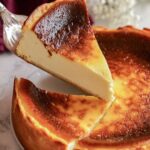
Best Easy Basque Cheesecake Recipe
- Prep Time: 15 minutes
- Cook Time: 1 hour
- Total Time: 11 hours 15 minutes
- Yield: 12 servings
- Category: Dessert
- Method: Baking
- Cuisine: Spanish
- Diet: Vegetarian
Description
This Basque Cheesecake recipe delivers a creamy, rich, and caramelized dessert with a rustic crust and silky center. It features full-fat cream cheese, heavy cream, and a touch of vanilla, baked at high heat to achieve a beautifully browned top and a delicate, jiggly middle that sets after chilling.
Ingredients
Cheesecake Batter
- 32 ounces cream cheese, room temperature and full-fat only
- 1½ cups granulated sugar
- 5 large eggs, room temperature
- 1½ cups heavy cream, room temperature
- 1 tablespoon vanilla extract
- 1 teaspoon salt
- ⅓ cup all-purpose flour, sifted
Instructions
- Prepare the pan: Preheat the oven to 425°F. Line a 9 or 10-inch springform pan with a criss-crossed double layer of parchment paper, scrunching and drying it to make handling easier. Allow the parchment to extend about 2 inches above the pan sides. Set aside.
- Whip the cream cheese: In a large bowl or stand mixer fitted with a whisk attachment, whip the cream cheese for 2 minutes until smooth and creamy.
- Add sugar: Add the granulated sugar gradually on medium speed and continue mixing for about 2 minutes until fully incorporated and lump-free. Scrape down the bowl as needed.
- Add eggs: Mix in the eggs one at a time on low speed, ensuring each egg is mostly incorporated before adding the next to prevent overmixing.
- Incorporate cream and flavorings: On low speed, add the heavy cream, vanilla extract, and salt. Mix until fully combined but do not overbeat.
- Add flour: Sift the flour into the batter and mix gently for about 20 seconds to incorporate.
- Transfer to pan: Pour the batter into the prepared springform pan, smoothing the top as needed.
- Bake: Place the pan on a rimmed baking sheet and bake on the middle oven rack for 65 minutes. The cheesecake will rise during baking and then sink while cooling; the top should be a deep golden brown and the center slightly jiggly.
- Cool: Remove the cheesecake from the oven and place it on a wire rack to cool to room temperature in the pan.
- Chill: Refrigerate the cheesecake in the pan for at least 8 hours, preferably overnight to allow it to set completely.
- Serve: Remove the cheesecake from the refrigerator 1 to 2 hours before serving. Lift it out using the parchment edges and slice with a knife warmed under hot water for clean cuts. Serve plain or with fruit compote or desired toppings.
Notes
- If available, use farm fresh double cream instead of regular heavy cream for a richer flavor.
- Do not remove the cheesecake from the pan until fully cooled to avoid cracking or breaking.
- The cheesecake is best served at room temperature but must be stored in the refrigerator.
- Store leftovers in the refrigerator for up to 1 week.
- Mix ingredients gently and avoid overwhipping to prevent air bubbles and maintain a silky texture.
- Freezing is possible for up to 3 months; cool completely, wrap well, and support with a cake board if possible.
- The cheesecake is rustic and imperfect by design; its caramelized surface and jiggly center add to its charm.
- Adjust sugar to taste: increase to 2 cups for sweeter or reduce to 1¼ cups for less sweetness.
Nutrition
- Serving Size: 1 slice
- Calories: 450 kcal
- Sugar: 30 g
- Sodium: 250 mg
- Fat: 36 g
- Saturated Fat: 22 g
- Unsaturated Fat: 12 g
- Trans Fat: 0 g
- Carbohydrates: 28 g
- Fiber: 0 g
- Protein: 7 g
- Cholesterol: 150 mg


Leave a Reply