
This might just become your new weeknight favorite. With a luscious silky sauce hugging every strand, this Creamy Butternut Squash Pasta Recipe is the perfect cozy meal that feels indulgent but is surprisingly simple to pull together.

Jump to:
Why You'll Love This Recipe
I love this dish because it combines the natural sweetness of roasted butternut squash with a creamy sauce that’s rich without being heavy—plus, the crispy pancetta adds the perfect salty crunch. Every bite feels like an upgrade from ordinary pasta night!
- Simple Ingredients: You don’t need anything fancy to make this sauce sing; just a few pantry staples that work together for big flavor.
- Comforting Yet Light: Using whole milk keeps it creamy without the heaviness of cream, so it’s satisfying but not too rich.
- Versatile Pasta Base: This sauce pairs beautifully with practically any pasta shape you have on hand.
- Make-Ahead Friendly: You can roast the veggies or prep the sauce ahead, which is great for busy evenings.
Ingredients & Why They Work
This recipe revolves around high-impact ingredients that bring sweet, savory, and creamy elements together seamlessly. Here are some little reasons why each component shines here—and easy shopping tips so you pick the best versions.

- Butternut squash: Roasting it caramelizes the natural sugars, creating a deep sweetness that forms the base of our creamy sauce.
- Whole garlic head: Roasting mellows and sweetens the garlic, which blends perfectly into the sauce without any sharpness.
- Yellow onion: Adds a savory depth—roasting softens it into sweet, tender bites that elevate the sauce.
- Pancetta: When crisped, it brings salty crunch and richness that contrasts so nicely with the creamy sauce.
- Whole milk: It makes the sauce silky without weighing it down—avoid heavy cream to keep it balanced.
- Chicken or vegetable broth: Adds umami flavor and thins the sauce to the perfect consistency.
- Dried Italian seasoning & nutmeg: Italian seasoning keeps things aromatic and herby, while a pinch of nutmeg adds a cozy warmth—just don’t skip the nutmeg!
- Parmesan cheese: Finishing touches with parmesan add salty umami and a little nuttiness, perfect for pasta.
Make It Your Way
I’ve played around with this recipe a lot, and I encourage you to do the same—it's so forgiving! Sometimes I swap the pancetta for crispy bacon when that’s what I have, or toss in some sautéed spinach for greens. You might enjoy different pasta shapes or add a sprinkle of toasted walnuts for crunch. Make it your own and have fun — that’s part of the joy!
- Vegetarian Variation: Skip the pancetta and add toasted pine nuts or sautéed mushrooms for an earthy texture and flavor. I sometimes do this when I want a meatless meal that's still satisfying.
- Seasonal Twist: Swap butternut squash for pumpkin in fall or sweet potatoes in winter for a slightly different sweet flavor.
- Spice it up: I’ve added a pinch of red pepper flakes to the sauce when I want a little heat—it’s a game changer!
Step-by-Step: How I Make Creamy Butternut Squash Pasta Recipe

Step 1: Roast the Veggies to Sweet Perfection
Start by preheating your oven to 425°F. Cut ¼ inch off the top of your garlic head (unpeeled), drizzle it generously with olive oil, sprinkle with salt and pepper, and wrap it tightly in foil—this little bundle will roast and transform your sauce. Toss your cubed butternut squash and chopped onions separately with olive oil, salt, and pepper on sheet pans. Roasting these separately helps them caramelize evenly. Roast everything for about 35 minutes, tossing halfway through, but keep an eye on the onions—they may finish earlier since they cook faster. When you smell that lovely roasted aroma, you’re on the right track!
Step 2: Cook the Pasta and Crispy Pancetta
While the veggies roast, cook your pasta in a large pot of boiling salted water until just al dente. I like to reserve about a cup of the starchy pasta water before draining and running the pasta under cold water—it stops the cooking and helps later when adjusting sauce consistency. In a skillet, cook diced pancetta until it’s golden and crispy. The fat will render out and add a great flavor punch when sprinkled on top of the finished dish.
Step 3: Blend the Sauce, Simmer, and Toss
Once the vegetables are perfectly roasted, pop the squash and onions into a blender. Squeeze the softened garlic cloves out of their skins and add those too. Pour in the milk and broth, then blend on high until silky smooth. This part is where you can gauge the creaminess—some squashes give more liquid naturally, so add more milk if you want it thinner and silkier. Transfer your creamy blend to a large skillet or the pasta pot and gently simmer. Season with Italian seasoning, salt, pepper, and a tiny pinch of nutmeg (trust me, it gives a warm depth that’s hard to beat). Add reserved pasta water a bit at a time until it coats your pasta beautifully. Finally, toss your pasta in the sauce, making sure every strand is luxuriously covered. Serve immediately topped with your crispy pancetta and a generous shower of Parmesan.
Top Tip
I’ve learned through making this recipe several times that those little details make a huge difference. Here are some of my best tips to help you nail this creamy butternut squash pasta every time.
- Roast Garlic Properly: Don’t peel the garlic before roasting. Keep it wrapped in foil so it steams, softens, and melts right into the sauce for creamy sweetness without any harsh bite.
- Check Your Butternut Squash Texture: Some squash vary a lot in moisture – check that your cubes are tender and caramelized, or the sauce can end up grainy. If needing more creaminess, add a splash more milk gently.
- Don’t Overcook Pasta: Rinse pasta briefly after draining to stop cooking—this keeps your noodles perfectly al dente when tossed with hot sauce.
- Nutmeg is Your Friend: Just a pinch adds a cozy warmth that balances the sweetness of the squash—it’s subtle but game-changing. Avoid adding too much or your sauce might taste spicy.
How to Serve Creamy Butternut Squash Pasta Recipe

Garnishes
I usually finish with a generous shower of freshly grated Parmesan and some chopped Italian parsley. The parsley adds a pop of color and a fresh herbal note that brightens every bite. If I’m feeling fancy, a drizzle of good quality olive oil gives a subtle fruity richness that makes the dish look and taste extra special.
Side Dishes
This pasta stands pretty well on its own, but I like to serve a crisp green salad with lemon vinaigrette alongside for contrast. Roasted Brussels sprouts or garlic bread are also great companions when you want a heartier meal. If you’re serving guests, a simple antipasto platter before dinner sets the tone nicely.
Creative Ways to Present
For special occasions, I’ve gone all out by plating the pasta in individual bowls topped with crispy pancetta and a little microgreens or edible flowers for a delicate touch. Another fun idea is serving in hollowed-out mini pumpkins or squash for an autumn-inspired presentation that guests love.
Make Ahead and Storage
Storing Leftovers
I store leftovers in an airtight container in the refrigerator for up to 3 days. Because the sauce thickens overnight, I recommend adding a splash of milk when reheating to bring back that creamy texture. Reheat gently on the stovetop or in the microwave for best results.
Freezing
I’ve frozen the sauce (without the pasta) successfully in freezer-safe containers. When ready to eat, thaw in the fridge overnight, then gently reheat with a splash of milk. I don’t recommend freezing the full pasta dish as noodles can become mushy after thawing.
Reheating
To reheat leftovers, warm the pasta gently on the stovetop over low heat with a little milk added to loosen the sauce. Stir often to prevent sticking. This method preserves that silky creamy texture better than the microwave, though the microwave works fine if you’re in a rush—just stir midway through.
Frequently Asked Questions:
Absolutely! Swap the pancetta for crispy smoked tofu or tempeh, use vegetable broth, and replace whole milk with unsweetened oat milk or a creamy plant-based milk. Skip the Parmesan or use a vegan cheese alternative.
I prefer thick spaghetti or bucatini because they hold the creamy sauce well, but you can use any pasta you like—pappardelle, linguine, penne, or even bowties work beautifully. It’s all about personal preference!
Yes! You can roast the butternut squash, onions, and garlic a day or two before, then blend and assemble the sauce when ready to serve. Alternatively, make the entire sauce ahead and simply cook the pasta fresh at serving time.
Whole milk strikes the perfect balance of creaminess without weighing down the sauce like heavy cream would. Skim milk tends to dilute the flavors and produce a thinner consistency. Whole milk or half-and-half create that silky perfect texture in the sauce.
Final Thoughts
I’ve come back to this Creamy Butternut Squash Pasta Recipe time and again, especially during the cooler months when I crave something warm and comforting but not too heavy. It’s one of those dishes that looks impressive but doesn’t stress you out in the kitchen—plus, it’s full of deep, cozy flavor that makes every bite special. I really hope you give it a try and see how easy it is to create something both simple and elegant. It’s like inviting a hug to dinner, and I know you’ll enjoy it just as much as I do.
Print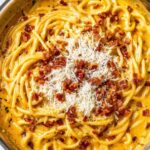
Delicious Recipe
- Prep Time: 45 minutes
- Cook Time: 15 minutes
- Total Time: 1 hour
- Yield: 4 servings
- Category: Main Course
- Method: Baking
- Cuisine: Italian
- Diet: Low Lactose
Description
This creamy Butternut Squash Pasta recipe features roasted butternut squash, caramelized onions, and roasted garlic blended into a smooth sauce with whole milk and broth. Tossed with al dente pasta and topped with crispy pancetta, grated Parmesan, and fresh parsley, it offers a cozy, comforting meal perfect for fall or any time you crave rich yet balanced flavors.
Ingredients
Vegetables
- 1 whole head garlic
- 1 medium butternut squash - peeled and cut into 1-inch cubes
- 1 large yellow onion - chopped
- Salt and pepper to taste
- Olive oil for drizzling
Pasta
- 1 pound thick spaghetti or bucatini pasta
Meat
- 1 cup pancetta, small-diced
Liquids & Seasoning
- 2 ½ cups whole milk (plus more as needed)
- 1 cup chicken or vegetable broth
- ¼ teaspoon dried Italian seasoning
- A pinch of ground nutmeg (optional)
Garnishes
- Chopped Italian parsley (optional)
- Grated Parmesan cheese for serving
Instructions
- Roast the veggies: Preheat the oven to 425 degrees Fahrenheit. Cut ¼ inch off the top of the whole unpeeled garlic head. Place it on aluminum foil, drizzle generously with olive oil, sprinkle ½ teaspoon salt and pepper, then wrap tightly. Toss the cubed butternut squash with olive oil, salt, and pepper on a large sheet pan. Do the same with chopped onions on a separate sheet pan, placing the wrapped garlic alongside. Roast all for 35 minutes until caramelized and softened, tossing the vegetables halfway through. Remove onions a few minutes earlier if needed.
- Cook pasta and pancetta: While the vegetables roast, cook the pasta in generously salted boiling water until al dente. Reserve 1 cup of pasta water, drain, and rinse with cold water to stop cooking. In a skillet, cook diced pancetta until golden brown and crispy, then set aside.
- Blend the sauce: Transfer roasted butternut squash and onions to a blender. Squeeze the softened roasted garlic cloves into the blender. Add whole milk and broth, then blend on high speed until smooth and creamy, adding extra milk as needed to reach desired consistency.
- Simmer and season sauce: Pour the creamy squash mixture into a large skillet or the pasta pot. Bring to a light simmer, adjusting sauce thickness with reserved pasta water or more milk. Season with dried Italian seasoning, salt, and pepper to taste. Add a pinch of ground nutmeg if using for warm flavor.
- Toss pasta and serve: Return the drained pasta to the pan with the sauce and toss until fully coated. Serve topped with crispy pancetta, grated Parmesan cheese, and garnish with fresh chopped parsley if desired.
Notes
- The amount of milk depends on the size of the butternut squash—adjust for desired sauce creaminess. Half-and-half can be used for added richness.
- Use whole milk or half-and-half for the best texture; avoid heavy cream as it will be too thick, and skim milk may be too diluted.
- Ground nutmeg is very strong so only use a small pinch; it adds warmth but can be omitted if preferred.
- You can prepare the roasted vegetables or sauce ahead to save time. The full dish can also be made in advance and reheated gently with extra milk to loosen the sauce.
- For substitutions: Use 2% milk or half-and-half instead of whole milk. Swap pancetta for crispy prosciutto or bacon. Use Pecorino Romano instead of Parmesan if desired. Any pasta shape works well, including bucatini, spaghetti, pappardelle, penne, fusilli, or bowties.
Nutrition
- Serving Size: 1 serving
- Calories: 530 kcal
- Sugar: 6 g
- Sodium: 650 mg
- Fat: 22 g
- Saturated Fat: 7 g
- Unsaturated Fat: 13 g
- Trans Fat: 0 g
- Carbohydrates: 62 g
- Fiber: 6 g
- Protein: 18 g
- Cholesterol: 45 mg




Leave a Reply