
Getting a flavorful dinner on the table takes just about 20 minutes with this Spicy Shrimp Lo Mein Recipe. It’s one of those dishes that feels fancy but comes together super fast – perfect for busy weeknights when you want a little kick without the hassle.

Jump to:
Why You'll Love This Recipe
I can’t tell you how many times I’ve come home starving and just thrown together this Spicy Shrimp Lo Mein Recipe. It’s quick, packed with flavor, and that little spicy kick makes it stand out from typical takeout versions. You’ll love how effortlessly impressive it tastes!
- Speedy and easy: Comes together in 20 minutes, making it a lifesaver on hectic nights.
- Customizable heat: You control the spice level by adjusting those red pepper flakes.
- Balanced flavors: The mix of soy and teriyaki sauces gives it that perfect salty-sweet combo.
- Fresh and vibrant: Carrots and green onions add crunch and freshness, keeping every bite lively.
Ingredients & Why They Work
Each ingredient in this Spicy Shrimp Lo Mein Recipe plays a role, bringing together a harmony of flavors and textures. The noodles soak up the sauce, the shrimp bring that satisfying protein, and the veggies add brightness. Here’s why I love these staples and some shopping tips to keep it fuss-free.

- Lo mein noodles: They’re perfect for holding onto the sauce without becoming mushy; fresh or dried work fine here.
- Extra virgin olive oil: Adds a mild, fruity base to sauté the shrimp and veggies without overpowering.
- Carrot: Thin slices cook just enough to keep a little bite, adding natural sweetness and color.
- Raw shrimp: Make sure they’re peeled and deveined for easy eating; they cook quickly and add that seafood goodness.
- Minced garlic: The trusty flavor booster, it wakes up the dish with savory depth.
- Low sodium soy sauce: Gives the salty umami backbone but lets you keep control over saltiness.
- Teriyaki sauce: Adds a touch of sweetness and a glossy finish that makes everything taste richer.
- Green onions: Adds a fresh oniony note and crunch, plus looks great sprinkled on top.
- Crushed red pepper flakes (optional): The spice that turns the heat dial up, but feel free to skip if you prefer mild.
Make It Your Way
I love to tweak this Spicy Shrimp Lo Mein Recipe depending on my mood or what’s in the fridge — and I encourage you to do the same! It’s super flexible, so feel free to swap, add, or leave out ingredients to suit your taste.
- Variation: When I’m craving extra veggies, I throw in snap peas or bell peppers – they add a great crunch and brighten the dish.
- Spice level: Sometimes I double the crushed red pepper flakes when I want it fiery; other times, just a pinch keeps it gentle.
- Protein swap: Not into shrimp? Try chicken strips or firm tofu instead for a different yet equally delicious version.
- Gluten-free: Use gluten-free noodles and tamari to make this recipe safe for gluten-free diets without losing flavor.
Step-by-Step: How I Make Spicy Shrimp Lo Mein Recipe

Step 1: Cook Your Noodles Perfectly
Start by cooking your lo mein noodles according to the package directions. Don’t overcook them – you want them just tender but still a little firm because they’ll cook a bit more in the pan later. Drain them thoroughly so they don’t get soggy when mixed with the sauce.
Step 2: Sauté the Carrots and Shrimp
Heat your olive oil in a large skillet or wok over medium heat. Toss in the thinly sliced carrots and cook for about 2 minutes – just enough to soften them slightly while keeping crunch. Push them to one side, add the shrimp, and cook until they turn pink, roughly 3 minutes. This layering helps everything cook evenly.
Step 3: Bring It All Together with Sauce
Stir the minced garlic into the skillet and let it sizzle for about 30 seconds to release that fragrant aroma. Pour in the low sodium soy sauce, teriyaki sauce, green onions, and crushed red pepper flakes if you’re using them. Toss the cooked noodles in and mix everything thoroughly. Stir continuously for 2-3 minutes until the noodles have soaked up the sauce and all the flavors marry beautifully.
Step 4: Garnish and Serve
Remove from heat, sprinkle with a handful of fresh green onions for an extra pop of color and flavor, and serve immediately while it’s steaming hot. The contrast of the spicy, savory noodles with fresh green onion is just unbeatable.
Top Tip
Through many attempts to perfect this Spicy Shrimp Lo Mein Recipe, I’ve learned a few things that can really elevate your dish and save you some headaches. Here are my go-to tips for success.
- Don’t overcrowd the pan: It’s tempting to throw everything in at once but cooking in batches ensures the shrimp gets that nice sear and the noodles don’t clump up.
- Drain noodles well: Excess water dilutes your sauce, so give those noodles a good drain or even a quick rinse after cooking to stop residual heat from overcooking them.
- Keep stirring: When adding the sauce and noodles, stir continuously so that everything heats evenly and the noodles absorb the flavors.
- Use fresh garlic and green onions: They bring a brightness and depth that jarred or dried versions just can’t match.
How to Serve Spicy Shrimp Lo Mein Recipe

Garnishes
I’m all about simplicity here — fresh chopped green onions sprinkled on top are my absolute favorite garnish. Sometimes, if I’m feeling fancy, I’ll toss on some toasted sesame seeds for a nuttier edge and crunch. Both add that perfect finishing touch that makes the dish look and taste restaurant-worthy.
Side Dishes
This Spicy Shrimp Lo Mein Recipe shines best with light, fresh sides. I like pairing it with steamed bok choy or sautéed garlic green beans for extra veggies, or even a crisp cucumber salad to cool the palate. A simple miso soup also complements the meal beautifully.
Creative Ways to Present
For special occasions, I’ve plated this lo mein in individual bowls lined with a few fresh cilantro sprigs and thin slices of red chili to amp up the color and spice visually. You can also serve it in lettuce cups for a fun handheld twist that impresses guests.
Make Ahead and Storage
Storing Leftovers
I usually store leftovers in an airtight container in the fridge for up to two days. To keep the noodles from drying out, I add a tiny splash of water before reheating. It helps keep things saucy and moist.
Freezing
While I prefer fresh, you can freeze cooked lo mein, but shrimp textures change when frozen — they get a bit rubbery. If you want to freeze it, try cooking shrimp separately when reheating for best results.
Reheating
The best way I’ve found to reheat is gently in a skillet over medium heat with a splash of water or soy sauce—this revives the noodles and keeps the shrimp tender. Microwaving works too but tends to dry out the dish slightly.
Frequently Asked Questions:
Yes, you can use frozen shrimp, but make sure to thaw them completely and pat them dry before cooking to avoid excess moisture which can prevent proper searing.
The spice level depends on how much crushed red pepper flakes you add. Start with a small amount if you’re sensitive to heat, and adjust to taste as you go.
Absolutely! Swap the shrimp for tofu or tempeh and use vegetable-based sauces to keep it vegetarian and just as flavorful.
Traditional lo mein noodles are ideal because they have the right texture and soak up sauces nicely. If unavailable, spaghetti or thin egg noodles are good substitutes.
Final Thoughts
This Spicy Shrimp Lo Mein Recipe holds a special place in my weeknight rotation because it’s fast, flavorful, and just plain satisfying. I love how easy it is to jazz it up or dial it back depending on what you’re craving or what’s in your pantry. Give it a try — I promise it’ll become one of your quick dinners to turn to when time is tight but you still want something delicious and a little spicy.
Print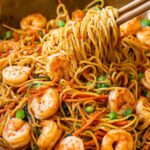
Delicious Recipe
- Prep Time: 5 minutes
- Cook Time: 15 minutes
- Total Time: 20 minutes
- Yield: 4 servings
- Category: Main Course
- Method: Stovetop
- Cuisine: Chinese
- Diet: Low Fat
Description
This Shrimp Lo Mein recipe features tender shrimp and crisp vegetables tossed with lo mein noodles in a savory soy-teriyaki sauce. Ready in just 20 minutes, it's a quick and delicious meal perfect for busy weeknights.
Ingredients
Noodles
- 8 ounces lo mein noodles
Vegetables and Protein
- 2 tablespoons extra virgin olive oil
- 1 medium carrot, peeled and thinly sliced
- 1 pound medium sized raw shrimp, peeled and deveined
- 1 tablespoon minced garlic
- 1 cup green onion, roughly chopped plus more for garnish
Sauces and Seasoning
- ⅓ cup low sodium soy sauce
- ¼ cup teriyaki sauce
- 1 teaspoon crushed red pepper flakes, optional
Instructions
- Cook Noodles: Cook the lo mein noodles according to the package directions until al dente. Drain well and set aside to prevent sticking.
- Heat Oil and Sauté Carrots: Heat the extra virgin olive oil in a large skillet or wok over medium heat. Once hot, add the thinly sliced carrots and sauté for 2 minutes until slightly tender.
- Cook Shrimp: Push the carrots to one side of the skillet, add the peeled and deveined shrimp, and sauté for 3 minutes until the shrimp turn pink and are cooked through.
- Combine Ingredients and Add Sauce: Stir all ingredients together in the pan. Then add the minced garlic, low sodium soy sauce, teriyaki sauce, chopped green onions, cooked noodles, and crushed red pepper flakes if using.
- Finish Cooking: Cook, stirring continuously, for 2 to 3 minutes to combine flavors and heat everything through evenly.
- Garnish and Serve: Remove from heat and garnish with additional chopped green onions before serving.
Notes
- To make gluten free shrimp lo mein, use gluten free noodles, substitute soy sauce for tamari or coconut aminos, and ensure the teriyaki sauce is gluten free.
- If you prefer less spice, omit the red pepper flakes or reduce the quantity.
- You can substitute the shrimp with chicken or tofu for different protein options.
- Make sure not to overcook the shrimp as they can become rubbery quickly.
- Using low sodium soy sauce helps control the saltiness, so adjust seasoning to taste.
Nutrition
- Serving Size: 1 serving
- Calories: 350 kcal
- Sugar: 6 g
- Sodium: 680 mg
- Fat: 7 g
- Saturated Fat: 1 g
- Unsaturated Fat: 5 g
- Trans Fat: 0 g
- Carbohydrates: 50 g
- Fiber: 3 g
- Protein: 25 g
- Cholesterol: 190 mg



Leave a Reply